
















Ahmed Alzahrani
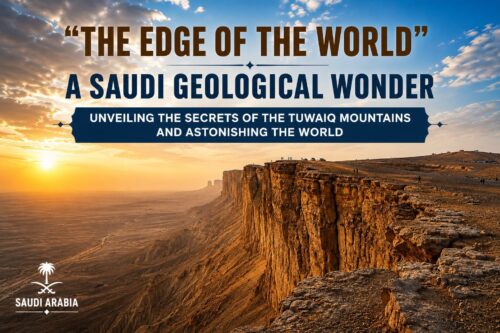
Directly west of the capital, Riyadh, lies “The Edge of the World” (Jebel Fihrayn)—a geological marvel that truly lives up to its name. It consists of a towering, massive wall of layered sandstone that rises dramatically from the reddish plain, which was once the seabed of an ancient ocean.
To reach this spectacular site—which is best visited using 4×4 vehicles—visitors can enjoy uninterrupted panoramic views from the summit across the stark, arid landscape, where camels can still be seen roaming along ancient caravan trails.
Known globally as the “Edge of the World,” it is considered one of the most spectacular natural landmarks in Saudi Arabia. Located in the Tuwaiq Mountains near Riyadh, the site is renowned for its towering cliffs, vast desert landscapes, and uninterrupted views stretching to the horizon.
Also known as “Fihrayn Mountain,” it is located approximately 90 to 100 kilometers from the city of Riyadh and rises about 1,131 meters above sea level. Its towering slopes form part of the Tuwaiq Escarpment, which stretches for more than 800 kilometers across central Saudi Arabia.
The name “Edge of the World” comes from the extraordinary feeling of standing at the end of the Earth; from the top of the cliffs, the landscape stretches toward the distant horizon with almost nothing obstructing the view.
Geological Significance
In addition to its breathtaking landscapes, the area offers a fascinating glimpse into the geological history of the Arabian Peninsula. Fossilized shells and traces of ancient aquatic life have been found in its rocks, suggesting that the area was once covered by an ancient body of water. The exposed rock layers document geological eras spanning vast periods of time.
The Edge of the World has become a popular destination for hiking, mountain exploration, photography, and desert adventures. Visitors follow trails through rugged terrain before reaching the majestic rocky cliff, where panoramic views stretch across valleys and desert plains.